
The AI engineering platform for your whole team
Your team is running more work than anyone can keep in their head. Foundry keeps track of all of it, and makes sure everything you ship is built the same way.
Rather have our team build it? See how we work →
Look inside Foundry
Follow one piece of work from the request to the platform underneath.
One window for your team's AI work. Click a numbered button on the window to look inside.
 Prime
Epic planned and running. Three stories, each in its own workspace.
billing/invoices.mddecisions/export-formats.mdapi/pagination.mdsrc/invoices/export.ts+112src/invoices/csv-writer.ts+64web/billing/ExportButton.tsx+38−1I'll message you when all three pass acceptance.
Foundry keeps the science consistent, so your team can focus on the art
Foundry keeps the science the same everywhere: every change follows the same steps and the same patterns. Your team decides and approves, and puts its craft into the product.
You describe the work, and Foundry breaks it into stories.
Agents build each story in parallel.
Your tests run again, and a second model reviews the work.
You approve the change before it ships.
Foundry checks the work itself
Foundry reruns your tests and checks and records the results. An agent can't mark its own work as done.
Invoice export to CSV
A second model reviews every change
One model builds, and a different one reviews the work against your docs. Findings are fixed before a person looks.
Export endpoint and CSV writer
Every service reads like one team wrote it
Errors, logging, permissions, and data access work the same way everywhere, so people and agents get it right the first time.
const invoice = await repo.get(id)
if (!invoice) throw new NotFound(id)assertCan(ctx, 'invoice.read')log.info('invoice.read', { id })
return invoice
const order = await repo.get(id)
if (!order) throw new NotFound(id)assertCan(ctx, 'order.read')log.info('order.read', { id })
return order
Agents read your patterns before they write
Foundry builds a Knowledge Center from your code and keeps it matched to the code as it changes.
Your architecture, patterns, and decisions, each with an owner.
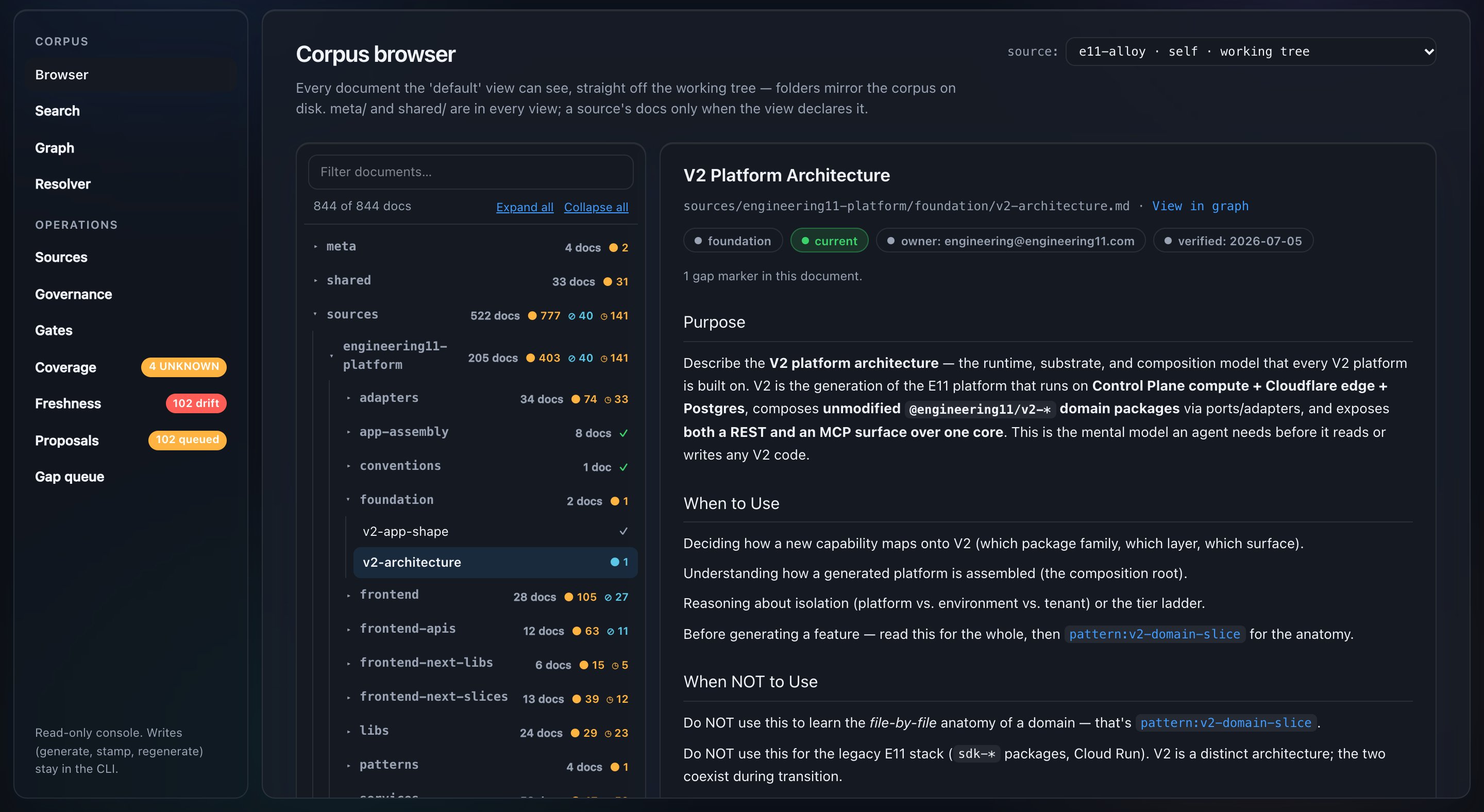
How every doc connects across your services.
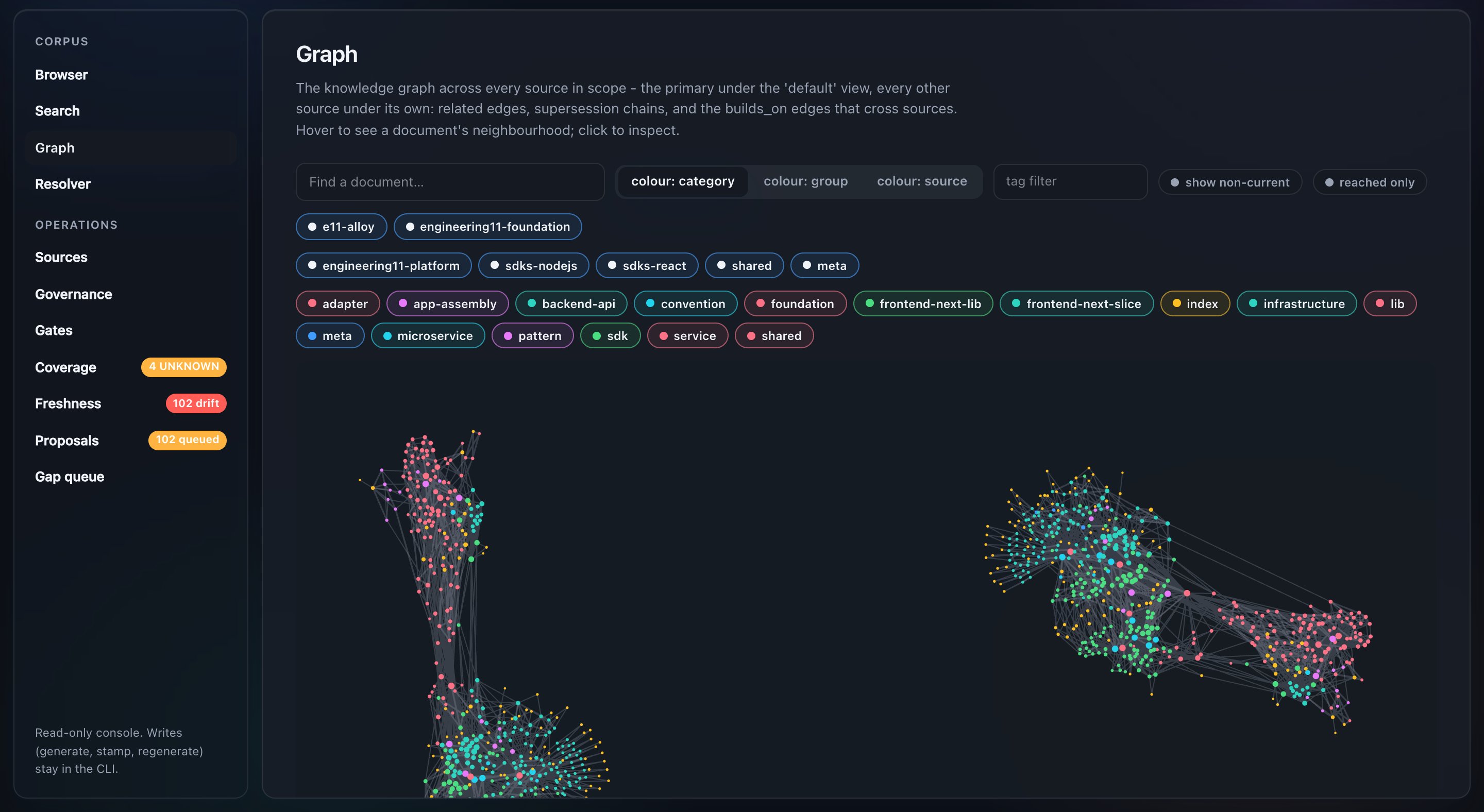
Every doc is checked like code before agents can use it.
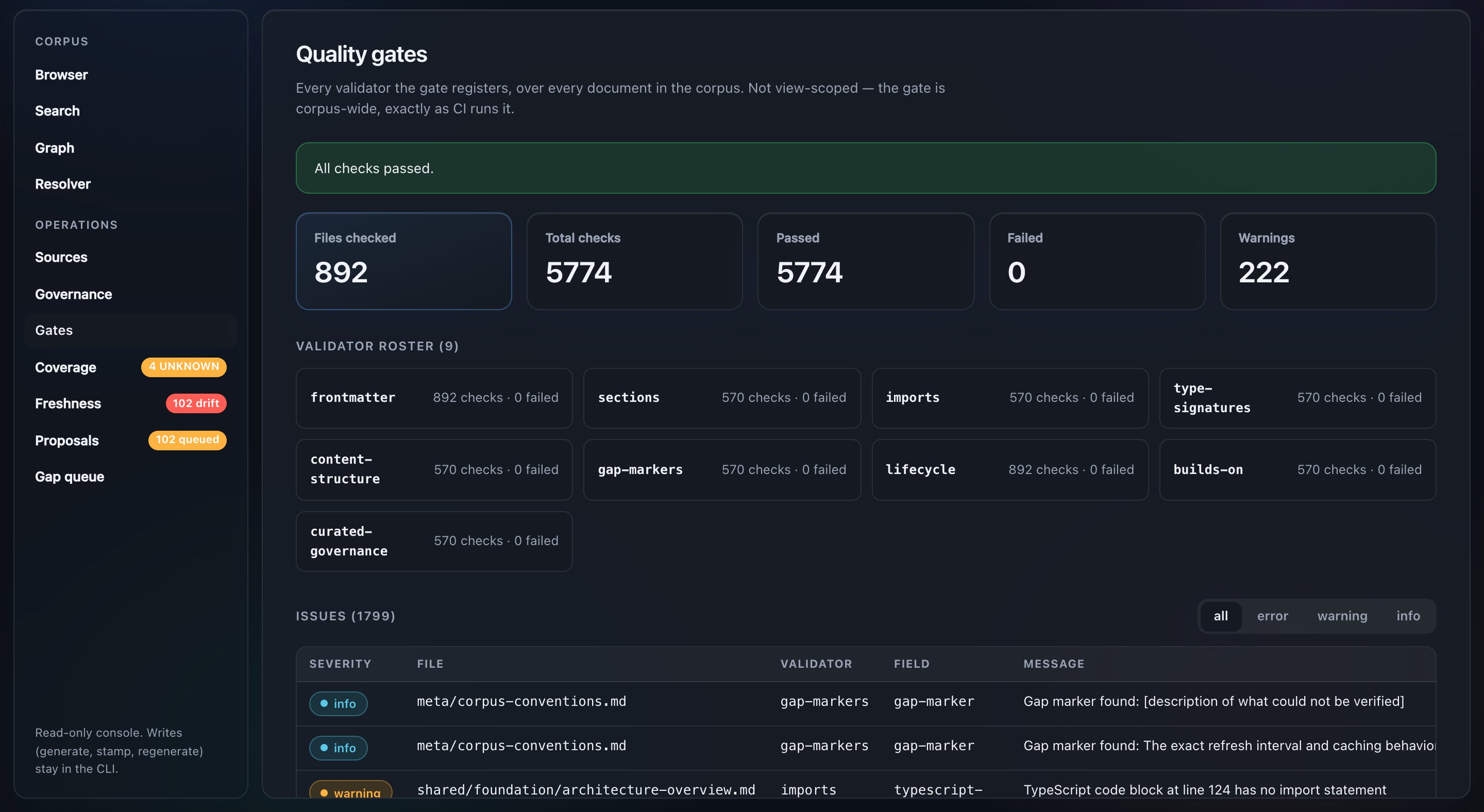
When the code changes, Foundry drafts the doc updates for your team to review.
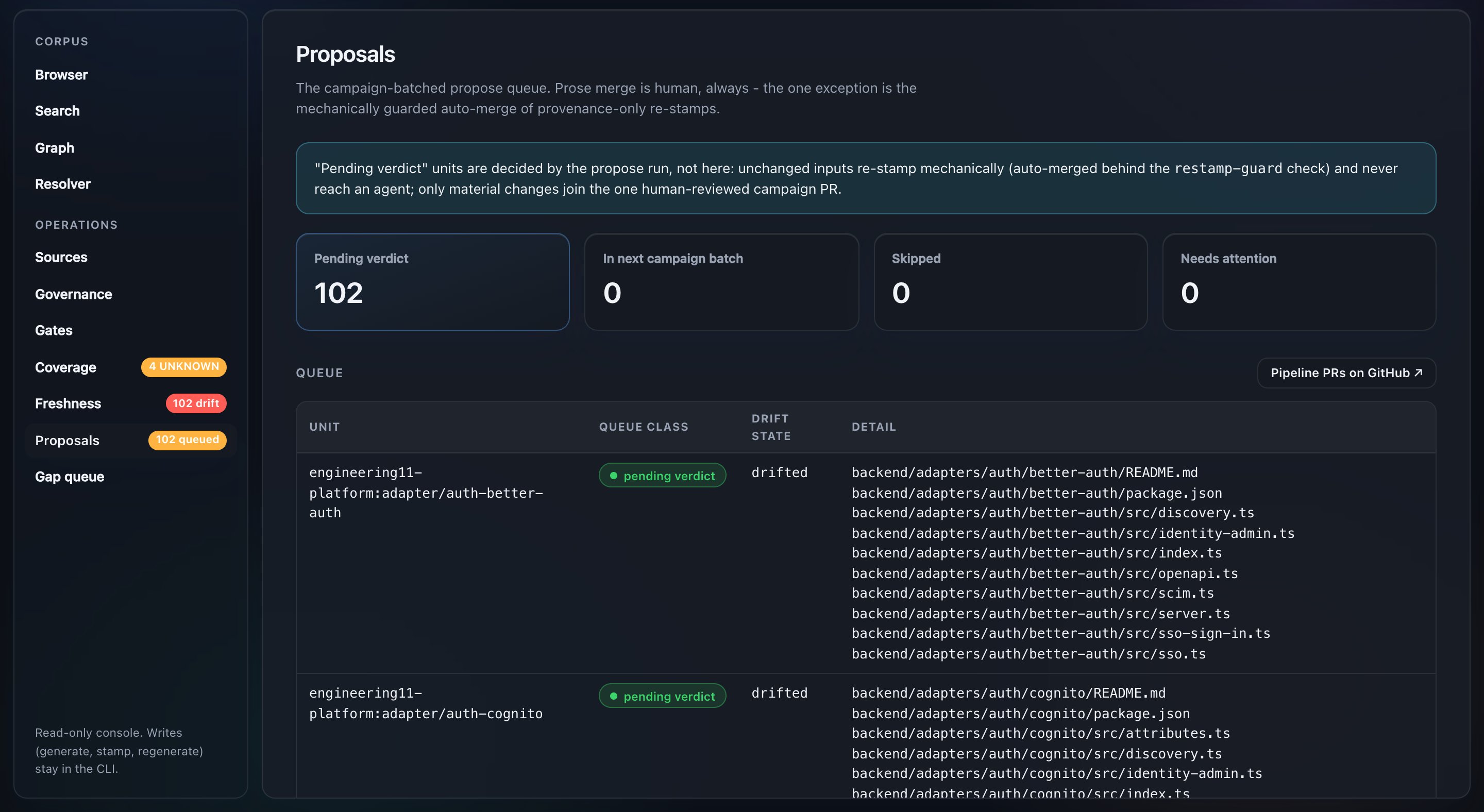
Start new products on a full platform
The Full-Stack Foundation is an optional add-on. Agents build a complete, working platform into your repo, documented end to end.
Foundry also works on the code you already have.
We use Foundry to build our own software
After its first release, Foundry built the rest of Foundry. Our engineers use it every day to build software for clients.
Our team builds it
We build it with your team and hand it over, or build, maintain, and operate the whole thing for you.
See how we workGet started with Foundry
Tell us what you're building. We'll show you Foundry on work like yours.
- Fill in the short form.
- We set up a walkthrough with your team.
- Start with Foundry, or have our team build it.